Within the emerging Web3 music legal framework, new tools empower artists through programmable royalties, fan ownership, and tokenized access. But while technology moves fast, the law moves carefully.
In music, the rise of NFTs and smart contracts raises one urgent question:
Who owns what, and under which jurisdiction?
This article breaks down how legal frameworks around NFTs, copyright, and smart contracts are evolving, and what musicians, labels, and developers should prepare for.
Within this evolving Web3 music legal framework, artists navigate new questions of ownership, jurisdiction, and digital rights.
Understanding the Web3 Music Legal Framework
Before diving into specific cases, it’s essential to outline what the Web3 music legal framework actually means.
It refers to the emerging set of rules, technologies, and agreements that govern how artists, fans, and platforms interact within decentralized music ecosystems.
This framework connects blockchain code, copyright law, and smart contracts, turning digital ownership into a legally recognized structure.
1) The Web3 Music Legal Framework: When Music Meets Blockchain
-
Web3 operates globally, but law is still national.
-
Copyright, licensing, and royalties are bound by territorial rules, while blockchains are borderless.
-
The core legal challenge: how to enforce rights when data lives on-chain and owners live everywhere?
Example: when a French artist mints an NFT on Polygon for a US-based fan, three jurisdictions collide: EU (GDPR + droit d’auteur), US (DMCA + SEC), and blockchain governance (token terms).
Web3 doesn’t erase law — it multiplies it.
2) What Does an NFT Actually Grant?
Owning an NFT doesn’t mean owning the song.
It means owning a token that points to a digital file — unless the artist explicitly embeds rights inside a smart contract or licensing clause.
Let’s clarify:
NFT Type
Legal Reality
Example
Collectible NFT
Proof of fandom, not copyright
Sound.xyz edition
Utility NFT
Access to events, merch, voting rights
Medallion Pass
Royalty NFT
Fractional ownership of future revenue
Royal.io or Anotherblock
Governance Token
Right to vote within DAO or fan community
RAC’s $RAC token
Most NFT buyers don’t acquire IP rights unless specified by license.
Some projects add an NFT License (similar to Creative Commons), defining whether the holder may reproduce, remix, or resell.
3) Smart Contracts and the Web3 Music Legal Framework
Smart contracts execute logic, not intent.
They automate payments, but they don’t yet replace the human-readable terms required by courts.
These mechanisms must still operate inside an overarching Web3 music legal framework that courts and regulators can interpret.
Best practice for musicians:
- Pair every smart contract with a plain-English legal document (off-chain) that outlines rights and responsibilities.
- Include clauses for:
- Usage rights (personal vs. commercial)
- Royalty splits & auditability
- Secondary sales terms
- Refund or burn policy
- Jurisdiction & dispute resolution
Rule of thumb: code enforces transactions; law enforces relationships.
4) Evolving Legal Frameworks (EU / US / UK / Asia)
Europe
-
EU Copyright Directive applies to digital exploitation rights.
-
GDPR imposes strict rules on blockchain storage (immutability vs. right to erasure).
-
France and Germany exploring DAO legal status (as associations).
United States
-
SEC: tokens with royalty-sharing models may qualify as securities (require KYC/AML).
-
Copyright law recognizes “joint authorship” but not “co-ownership via token”.
-
Smart contracts not enforceable as “written signatures” unless mirrored in paper or PDF.
UK
-
NFTs treated as property rights since 2023 case Lavender v. McDonald.
-
Guidance by UK Law Commission emphasizes “digital asset as thing in possession”.
Asia
-
Singapore: supportive sandbox for Web3 licensing.
-
Japan: NFTs tied to IP law via “digital certificate of ownership” under 2024 reform.
-
South Korea: new framework classifies music NFTs as “digital cultural assets”.
regulation is not harmonized. Global releases demand multi-jurisdictional compliance.
5) NFT Use Cases That Blur the Line
Merch & Experience
NFTs as concert tickets, backstage passes, or merch certificates.
→ Governed by consumer law and event regulations.
Voting Rights
DAO governance ≠ corporate voting.
→ Must include disclaimers to avoid classifying tokens as equity.
Revenue Shares
Royalty NFTs = potential securities.
→ Require full disclosure and KYC under EU MiCA or US SEC.
AI & Licensing
When AI generates or clones vocals (e.g. Holly Herndon DAO), legal authorship must be declared.
→ Include explicit training consent and dataset ownership clauses.
Medallion x Magic: Building a Compliant Web3 Music Ecosystem
The Web3 music legal framework isn’t just theory — it’s already in action.
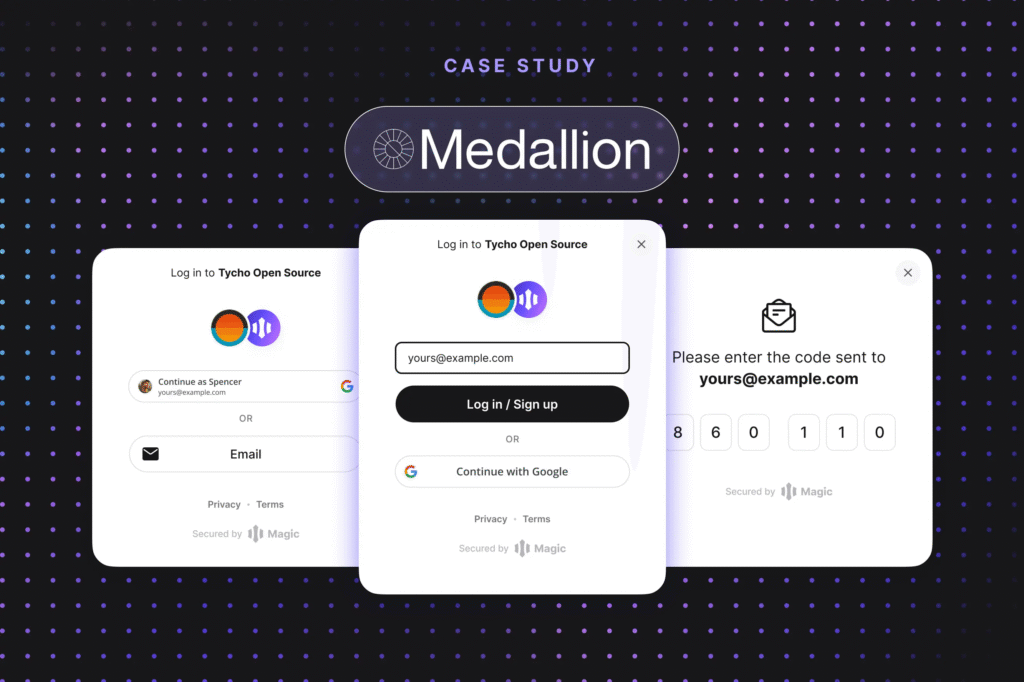
A clear example comes from Medallion, an artist–fan platform built with the Magic Wallet SDK.
By integrating tokenized fan access, DAO governance, and smart-contract-based royalties, Medallion enables musicians to distribute exclusive content legally while maintaining transparency.
Key legal takeaways:
-
Every NFT includes explicit secondary-sale and royalty clauses.
-
Fan tokens remain utility tokens, not securities, thanks to clear disclaimers and KYC.
-
Data privacy and ownership respect GDPR standards (no personal data stored on-chain).
Impact:
Artists gain traceable revenue splits and ownership tracking; fans gain verified, token-gated experiences.
According to Magic’s 2023 case study, Medallion saw a +45 % rise in active fan engagement within six months, proving that legal compliance can fuel community growth.
(Source: Magic x Medallion Case Study, 2023)
6) Building Legal Trust within the Web3 Music Legal Framework
Why the Web3 Music Legal Framework Matters for Artists
Checklist for compliant Web3 music drops:
- Define what the NFT holder can do (listen, share, resell, remix, vote).
- State jurisdiction and applicable law.
- Automate splits transparently but mirror terms off-chain.
- Offer refunds or burn rights to comply with EU consumer law.
- Store only hashes on-chain, not personal data.
- Add a “Legal License File” in metadata (JSON or IPFS link).
Trust is programmable, but accountability isn’t.
7) The Future: From Regulation to Recognition
Web3 is forcing lawmakers to rethink IP, ownership, and fan participation.
Expect clearer frameworks by 2026–2028 covering:
-
DAO registration,
-
tokenized royalties under securities law,
-
standard NFT licenses (music, merch, visuals),
-
blockchain-compatible copyright registries.
When law catches up with code, creators will finally have both: autonomy and accountability.
A coherent Web3 music legal framework will let artists enjoy both creative freedom and legal recognition.
Conclusion — Compliance as Creativity
Legal clarity isn’t a barrier to innovation; it’s the bridge.
When smart contracts meet smart law, musicians can build sustainable ecosystems where fans are partners, not risks.
At Loud Raven, we help artists and teams design Web3 strategies that respect both creativity and compliance. From token utility to legal structure.